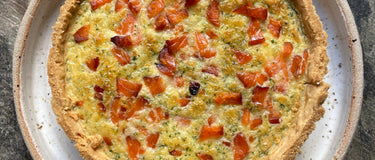
Credit: Stephen Jackson
Ingredients:
1 x 320g pack ready-made rolled shortcrust pastry
6 medium free-range eggs, beaten
6 large new potatoes, cooked, cooled and sliced thickly
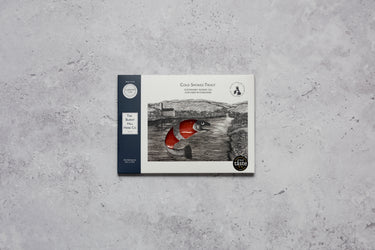
100g Burnt Hill Traditional Cure Smoked Trout, roughly chopped
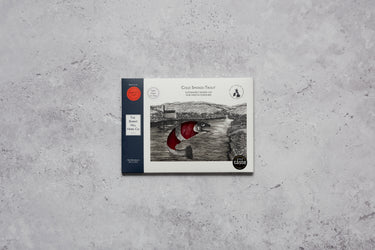
4 slices Burnt Hill Beetroot Cure Smoked Trout
1 teaspoon finely chopped parsley
Salt & Pepper
Extras:
1 x 9in tart case
Baking parchment & baking beans or pastry weight
Method:
Preheat the oven to 200°C (180°C fan). Lay a few slices of the beetroot cure trout onto a baking tray lined with a little greaseproof paper, and roast for about 10-15 minutes until crispy-edged and gently sizzling. Set aside until cooled, then chop into small pieces.
Put a baking sheet in the oven. Prepare a 23cm (9in) fluted tart case. Make a disc of greaseproof / baking parchment about 14” in diameter. Scrunch it up into a small ball, then gently unfold it. This helps the baking beans get right into the corners of the pastry. Press the pastry gently into the tart case, trimming any large flaps, but leaving an inch or two intact and protruding over the edge (we will trim it later) and work it carefully into the corners. Carefully press the paper disc into the case, and fill with baking beans or pastry weights. Chill the tray for at least 30 minutes, to allow the pastry to set up. Then, bake the pastry for 15 minutes. It should be a nice golden syrup colour. Pop back in the oven if it’s not quite there. Then, carefully remove the paper and baking beans, and bake uncovered for a further 10 minutes. Remove from the oven and set aside.
In a large bowl, whisk the mascarpone with the eggs and stir in the parsley. Season judiciously, bearing in mind the cooked trout will add quite a salty touch. Now, layer up slices of potato and the traditional-cure trout pieces. Pour the filling carefully into the pastry case and bake for 15 minutes. Then, scatter the beetroot-cure ‘bacon’ bits over the quiche, return to the oven and bake for a further 15-20 minutes, until the filling has almost set. It should wobble seductively. Remove from the oven and, using a serrated knife, gently cut away the excess pastry rim to leave a neat, beautiful quiche. Serve warm, with some lightly-dressed salad leaves.